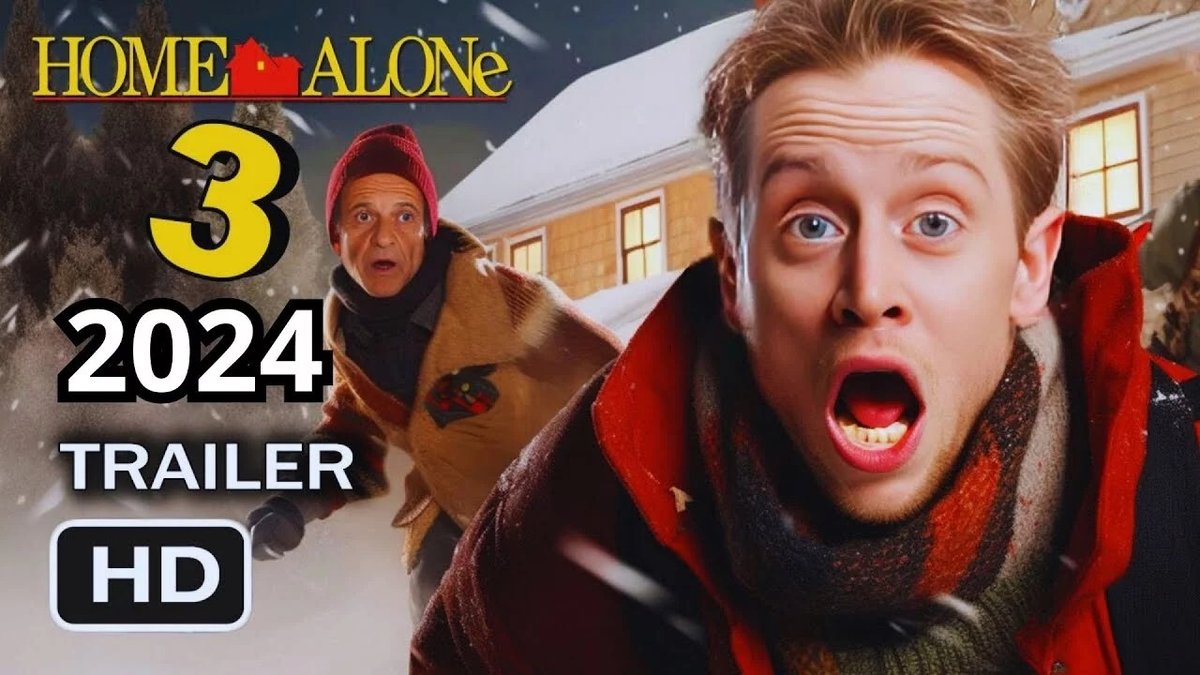
The festive season has always been a time for warmth, family, and, for many, a yearly rewatch of a certain holiday classic. But what happens when the snow globe cracks, and a beloved franchise attempts to recapture its magic decades later? We're talking, of course, about the enduring legacy of Home Alone and the towering expectations surrounding Critical Reception & What Home Alone 7 Needs to Deliver if it hopes to truly succeed.
From its humble, yet explosive, beginnings in 1990, Home Alone became an unexpected cultural phenomenon. Yet, the road for its successors has been rocky, often plagued by criticism and audience fatigue. Now, with Home Alone: The Magic Wardrobe (aka Home Alone 7) on the horizon, scheduled for a 2025 release, the question isn't just if it will arrive, but how it will be received. Can a new generation of filmmakers and actors breathe fresh life into a concept that, frankly, has been done to death? More importantly, can it earn a place in our hearts, rather than just our streaming queues?
At a Glance: What Home Alone 7 Must Get Right
- Reclaim the Heart: Go beyond slapstick to ground the story in genuine family connection and relatable holiday stress.
- Modernize, Don't Rehash: Update the premise with contemporary family dynamics and technology without losing the classic spirit.
- Craft Memorable Characters: Give us protagonists and antagonists we genuinely care about, beyond their roles in a chase scene.
- Balance Humor and Harm: Deliver the signature elaborate traps, but with a comedic touch that avoids problematic levels of violence.
- Acknowledge the Legacy, Forge a New Path: Reference the original without being a slave to it; offer a fresh story arc.
- Elevate the Stakes (Emotionally): Make us root for the family to reunite and the hero to succeed for reasons deeper than just thwarting burglars.
- Authentic Disney Touch: Leverage Disney's storytelling prowess for warmth and humor, avoiding a generic, made-for-TV feel.
The Original's Uneven Foundation: A Classic Forged in Mixed Reviews
Let's rewind to 1990. Imagine a world before internet memes, where a movie about an 8-year-old defending his home from bumbling burglars could become the highest-grossing comedy of its time. Written by the inimitable John Hughes and directed by Chris Columbus, Home Alone starred a precocious Macaulay Culkin as Kevin McCallister, alongside Joe Pesci (Harry) and Daniel Stern (Marv) as the iconic "Wet Bandits." Catherine O'Hara rounded out the main cast as Kevin's frantic mother.
The plot was simple genius: A large, chaotic family accidentally leaves young Kevin behind during a holiday vacation, forcing him to become the unlikely protector of his suburban Chicago home against two persistent, yet hilariously incompetent, burglars. Culkin’s performance was universally praised, even earning him a Golden Globe nomination.
However, despite its eventual status as a beloved holiday classic, Home Alone's initial critical reception was surprisingly mixed. Rotten Tomatoes, aggregating reviews, gives it a 66% score—hardly stellar for a film that would define a generation's Christmas. Critics at the time pointed to what many still notice today: plot holes that strain credulity (how do you forget a child?), and the increasingly violent nature of Kevin's booby traps. The sheer physical trauma inflicted upon Harry and Marv often raises questions: "Could they really survive that?" It's a valid point that has always hovered just beneath the surface of the slapstick humor.
Yet, Home Alone endures. It’s not just the cartoonish violence or the ingenious traps. Its lasting appeal stems from several key ingredients:
- Lighthearted Approach: Despite the home invasion premise, the tone is overwhelmingly comedic and warm.
- Irreverent Humor: From Kevin's one-liners to the bandits' reactions, the film is genuinely funny.
- Kevin's Journey: The emotional core of Kevin learning to appreciate his family and realizing that "being grown up" isn't all it's cracked up to be resonates deeply.
- Mother's Determination: Kate McCallister's tireless, cross-country journey to reunite with her son provides a powerful, relatable emotional anchor.
These elements crafted a film that transcended its flaws, proving that heart and humor can overcome a bumpy critical start. This historical context is crucial, as it sets the baseline for what Home Alone 7 must either replicate or ingeniously reinvent. Understanding the [evolution-of-holiday-classics] often means dissecting what made the original resonate so deeply.
The Stumble After the Sprint: Franchise Fatigue Sets In
Following the original's massive success, Home Alone 2: Lost in New York (1992) brought back the core cast, replicating much of the original's formula with a bigger budget and a new urban playground. While it performed well commercially, critics largely saw it as a less original, more extreme version of the first. This is where the franchise began to show cracks.
Subsequent entries, like Home Alone 3 (1997), which introduced a new family and premise, and various direct-to-video or streaming reboots like Home Alone 4: Taking Back the House (2002), Home Alone: The Holiday Heist (2012), and Home Sweet Home Alone (2021), largely failed to capture the magic. They suffered from generic plots, forgettable characters, and a distinct lack of the Hughes-Columbus spark. The critical consensus became clear: merely swapping out the kids and burglars wasn't enough. The [history-of-home-alone-films] is a textbook example of how a brilliant concept can be diluted over time.
This history of diminishing returns is the heavy baggage Home Alone 7 carries. It's not just another sequel; it's a redemption arc for a franchise that has largely lost its way.
Enter Home Alone 7: A New Chapter, a Familiar Challenge
Scheduled for a 2025 release, Home Alone: The Magic Wardrobe is a standalone sequel to the 2021 Disney+ film Home Sweet Home Alone, marking the first theatrical Home Alone release since 1997's Home Alone 3. This is a significant move, signaling a renewed ambition for the brand.
Written and directed by Leonardo Navarrete, and produced by Angelo Sotria, Matthew Stephens, and Scott Jarkoff, The Magic Wardrobe is also a first for the franchise: it’s produced and distributed by Walt Disney Pictures and Walt Disney Studios Motion Pictures, respectively. This Disney backing brings both immense resources and distinct creative challenges.
The plot centers on the Tanner family’s planned Christmas vacation to Copenhagen, Denmark. Principal photography kicked off on January 20, 2025, in Forest Hills, Queens, New York, and wrapped on April 14, 2025, in Vancouver, British Columbia, Canada. For those seeking a tangible connection, the Tanner house exterior is located at 61 Greenway S, Forest Hills, Queens, New York 11375.
The cast list is intriguing, blending established names with rising stars:
- Ryder Jack Parker as Danny Tanner
- Cole Sprouse as Darryl Browning
- Dylan Sprouse as Dallas Browning
- Debby Ryan as Christine Browning
- Ryan Gosling as Michael "Sodapop" Horton
- Connor Corley as John Tanner
- Margot Robbie as Alyssa Tanner
- Gerry Bamman as Frank McCallister (an antagonist)
- Terrie Snell as Leslie McCallister
- Jesse McCartney as NYPD detective Stan Pruitt
The return of Gerry Bamman and Terrie Snell as Frank and Leslie McCallister, Kevin’s notoriously grumpy uncle and aunt, is a clear nod to legacy, positioning them as antagonists. This is an immediate point of interest and potential success or failure for the new film. You can Learn more about Home Alone 7 and its production details here.
What Home Alone 7 Needs to Deliver: A Blueprint for Success
For Home Alone: The Magic Wardrobe to succeed, it needs to be more than just another holiday movie. It needs to be a thoughtful evolution of a classic concept, understanding its roots while fearlessly paving a new path.
1. Reclaiming the Heart: Beyond the Hilarious Havoc
The original Home Alone was never just about the traps. It was about a child’s wish, a family’s struggle, and the profound realization of what truly matters during the holidays. Home Alone 7 must prioritize this emotional core.
- Genuine Family Dynamics: The Tanner family needs to feel real, with relatable quirks, conflicts, and underlying affection. Why is Danny left behind? Is it an accident born of holiday chaos, or a deeper family dynamic at play? The audience needs to invest in their relationships.
- The Child's Perspective: The central child character, Danny Tanner (Ryder Jack Parker), needs to be more than just a plucky kid. Give him a specific emotional journey—perhaps he feels overlooked, wishes for independence, or struggles with family expectations. His growth throughout the film should be as satisfying as the burglars' downfall.
- Relatable Stakes: The goal shouldn't just be "stop the bad guys." It should be about Danny protecting something invaluable, or his parents (Margot Robbie as Alyssa and Connor Corley as John Tanner) desperately trying to reconnect with him, facing their own trials.
2. Balancing Humor and (Almost) Harm: The Trap Conundrum
The traps are the Home Alone brand's signature, but they’re also its biggest critical vulnerability. The original film walked a fine line, using cartoon physics to make skull-crushing blows feel like harmless slapstick. Later films often struggled, either making the traps too bland or too genuinely sadistic.
- Creative, Not Cruel: The traps need to be ingenious, surprising, and visually funny. Think Rube Goldberg machines of holiday chaos, not torture devices. The humor should come from the setup and the burglars' exaggerated reactions, not from the implied severity of the injury.
- Physical Comedy Masters: The antagonists, the Browning siblings (Cole and Dylan Sprouse) and Christine Browning (Debby Ryan), along with the McCallister relatives, need to be expert physical comedians. Their reactions to the traps are just as important as the traps themselves. If Ryan Gosling's Michael "Sodapop" Horton is involved in the slapstick, he needs to nail that balance.
- Consequences (Within Reason): Acknowledge that the traps hurt, but ensure the consequences remain in the realm of cartoonish recovery, not broken bones and hospital visits. The focus should be on the burglars' frustration and stupidity, not their suffering. This is a critical distinction, especially for a Disney film.
3. Modernizing the Premise: The Digital Age and Beyond
The concept of a child being left home alone in 1990 is far different from today, where every parent has a smartphone and Ring doorbell.
- Embrace Technology (and its Fails): Integrate modern tech naturally. How do the parents realize Danny is missing? Is it a glitch, a dead phone, a forgotten charger? How does Danny use smart home devices (or hack them) to his advantage? This can lead to fresh comedic scenarios and plot developments.
- New Family Structures: The Tanner family can reflect contemporary family dynamics. Perhaps they are a blended family, or dealing with unique holiday stresses beyond simple forgetfulness. This opens doors for new character arcs and humor.
- Global Context: The Copenhagen vacation provides an international backdrop, which can introduce new cultural comedic clashes and challenges for the traveling parents. How does navigating a foreign country complicate their desperate return? The plot already sounds promising in this regard. This new setting offers a great opportunity to explore [modern-family-film-challenges] with a fresh perspective.
4. Casting & Character Development: Making New Icons
A stellar cast is only as good as the characters they portray.
- A Protagonist Worth Rooting For: Ryder Jack Parker’s Danny Tanner needs to be distinct from Kevin McCallister. Give him his own fears, strengths, and unique personality. Is he an aspiring inventor, a tech whiz, an overly imaginative kid?
- Memorable Antagonists: The Browning siblings (Cole and Dylan Sprouse) and Christine Browning (Debby Ryan) need to be more than just "bad guys." Give them personalities, a comedic dynamic, and perhaps even a relatable, albeit misguided, motivation. The return of Frank and Leslie McCallister (Gerry Bamman, Terrie Snell) as antagonists is a high-risk, high-reward move. They can’t just be caricatures; they need to feel like genuine, if comically villainous, extensions of the McCallister legacy. [crafting-memorable-villains] involves giving them clear, if misguided, goals.
- Support System: Ryan Gosling as Michael "Sodapop" Horton and Jesse McCartney as NYPD detective Stan Pruitt are interesting additions. How do they fit into the plot? Are they allies, comic relief, or unexpected obstacles? Their roles need to be clearly defined and contribute meaningfully.
- The Parents' Plight: Margot Robbie and Connor Corley as Alyssa and John Tanner need to convey genuine parental anguish and determination. Their journey to get back to Danny should be as engaging as Danny's defense of the home.
5. Avoiding Past Pitfalls: No More Generic Reboots
The franchise's biggest mistakes have been playing it too safe or trying too hard to copy the original without understanding its soul.
- Original Story, Not Retread: Do not rehash the "left behind, burglars attack" plot beat-for-beat. The Copenhagen vacation and the "Magic Wardrobe" title hint at something new, which is promising. Lean into that originality.
- Strong, Clear Narrative: The plot should flow logically, even with comedic license. Avoid the lazy writing and plot holes that plagued later sequels.
- Don't Rely on Nostalgia Alone: While the return of Frank and Leslie McCallister is a nice touch, Home Alone 7 cannot survive on nostalgia bait. These characters need to serve the new story, not just be fan service. The film should stand on its own two feet. This is key for avoiding [reboot-fatigue-analysis].
6. The Disney Factor: A Double-Edged Sword
Being produced and distributed by Walt Disney Pictures and Walt Disney Studios Motion Pictures is huge.
- Leverage Disney's Storytelling Prowess: Disney excels at heartfelt stories, compelling character arcs, and high-quality production values. Home Alone 7 should tap into this, ensuring strong writing and direction.
- Maintain Edge, Avoid Sanitization: While Disney is known for family-friendly content, Home Alone thrives on a certain chaotic energy and mischievous spirit. Disney must avoid over-sanitizing the film, stripping it of its unique comedic edge. The traps, in particular, need to retain their playful danger.
- Global Reach: Disney’s marketing and distribution power means Home Alone 7 will reach a massive global audience. This opportunity demands a film that genuinely lives up to the brand. This is a crucial element of the overall [disney-reboot-strategy].
Addressing Common Questions & Misconceptions
Q: Will Home Alone 7 ignore Home Sweet Home Alone (2021)?
A: The ground truth states it is a "standalone sequel" to Home Sweet Home Alone. This implies it acknowledges the previous streaming film but likely won't require viewers to have seen it to understand the plot. It aims for a fresh start while maintaining continuity within the Disney era.
Q: Why are Frank and Leslie McCallister antagonists?
A: Gerry Bamman and Terrie Snell are confirmed as antagonists. Their characters in the original films were already comically unpleasant (Uncle Frank's "look what you did, you little jerk!"). Elevating them to active antagonists could be a clever way to link to the original without rehashing the Wet Bandits, and provide a familiar, yet twisted, comedic villain dynamic.
Q: Will it be too violent for a Disney film?
A: Disney’s involvement likely means the violence will be more cartoonish and slapstick, similar to the original film's intent, rather than genuinely harmful. The challenge will be to make the humor land without pushing boundaries that would make it inappropriate for a broad family audience.
Q: Can a Home Alone film still work in the age of smartphones?
A: Absolutely, but it requires creative writing. The plot needs a compelling reason for the child to be isolated (e.g., family chaos, lost phone, remote location, power outage) and for the parents to be genuinely delayed in their return. This allows for modern comedic scenarios, like a child outsmarting high-tech intruders or using smart home devices in unexpected ways.
The Magic Wardrobe: A Glimmer of Hope for the Holidays
Home Alone: The Magic Wardrobe isn't just another sequel; it's a critical moment for a beloved franchise. With a strong creative team, an interesting cast, and the formidable backing of Disney, there's genuine potential for something special. It needs to embrace its legacy while confidently stepping into the future, understanding that the enduring magic of Home Alone comes not from the violence, but from the heart, the humor, and the universal desire for family connection during the most wonderful—and sometimes most chaotic—time of the year.
If it can deliver on these fronts, offering both genuine laughs and a poignant story, Home Alone 7 won't just avoid critical scorn; it might just carve out its own cherished spot in the pantheon of holiday classics. The audience is ready for magic, not just mayhem.